

California’s wildfire seasons are becoming more intense, and the state’s public bank of seeds to help replant and reforest lands after blazes is understocked by thousands of pounds.
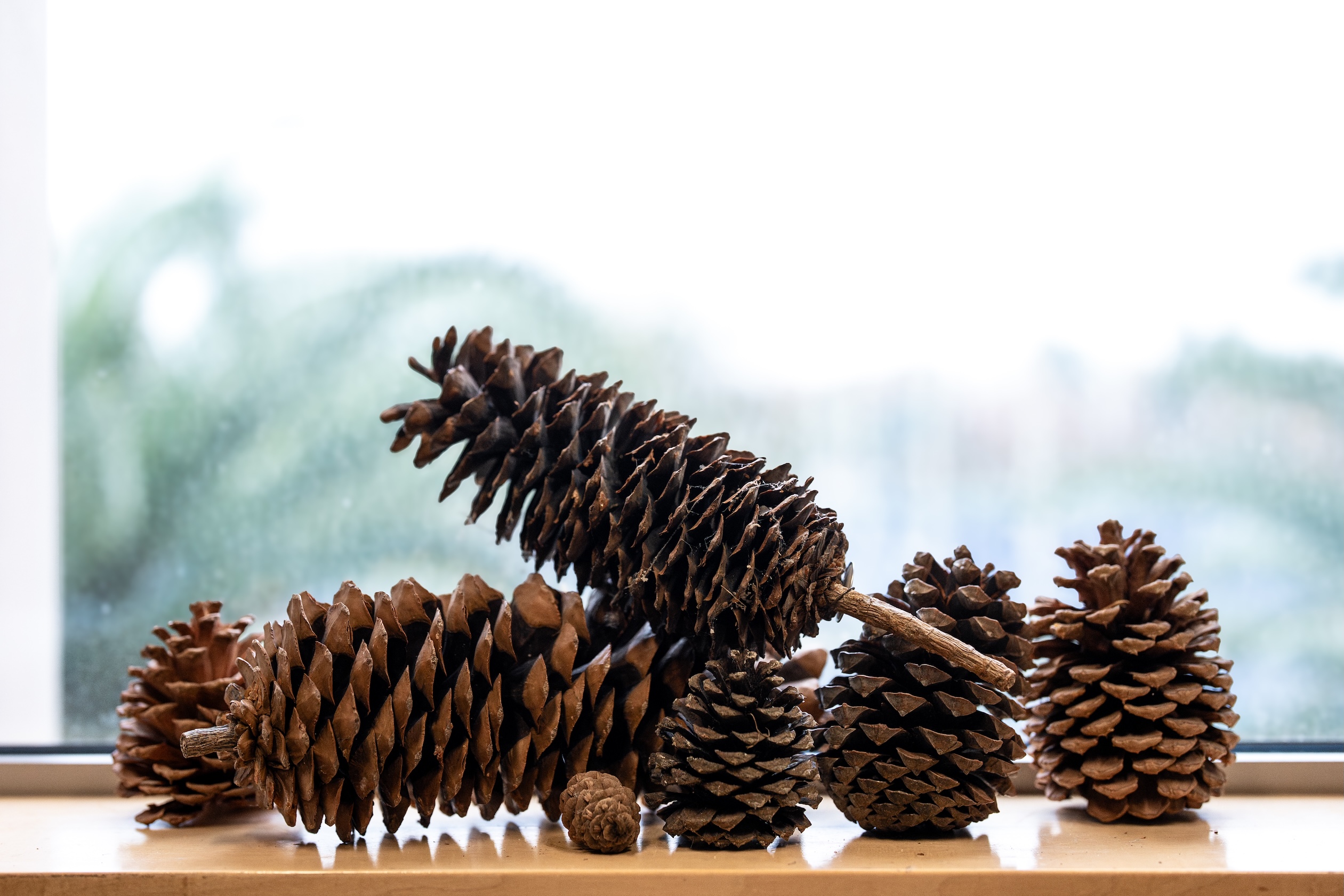
A new research project out of University of California, Davis, aims to help solve that problem by using decades of data from historical cone collection records to model when cones in coniferous trees from wild stands will ripen.
It’s notoriously tricky trying to predict ripening and it’s never the same from year to year or forest stand to forest stand. Collection must happen in a short window of time – usually only one to three weeks – between when the seeds inside cones ripen and when the cones open and drop their seeds.
Using collection records from the past to forecast cone ripeness timing could give land managers, nurseries, tree climbers and cone collectors a hand up in their efforts to collect, dry and store viable seeds for future reforestation needs.
Recovering after wildfire
“If you have a really large high-severity patch where there’s almost no surviving trees, there is basically no seed available in that patch for forest recovery,” said Nina Venuti, a Ph.D. student in ecology who is leading the cone ripening research. “The goal is to facilitate increased capacity for seed collection and reforestation.”
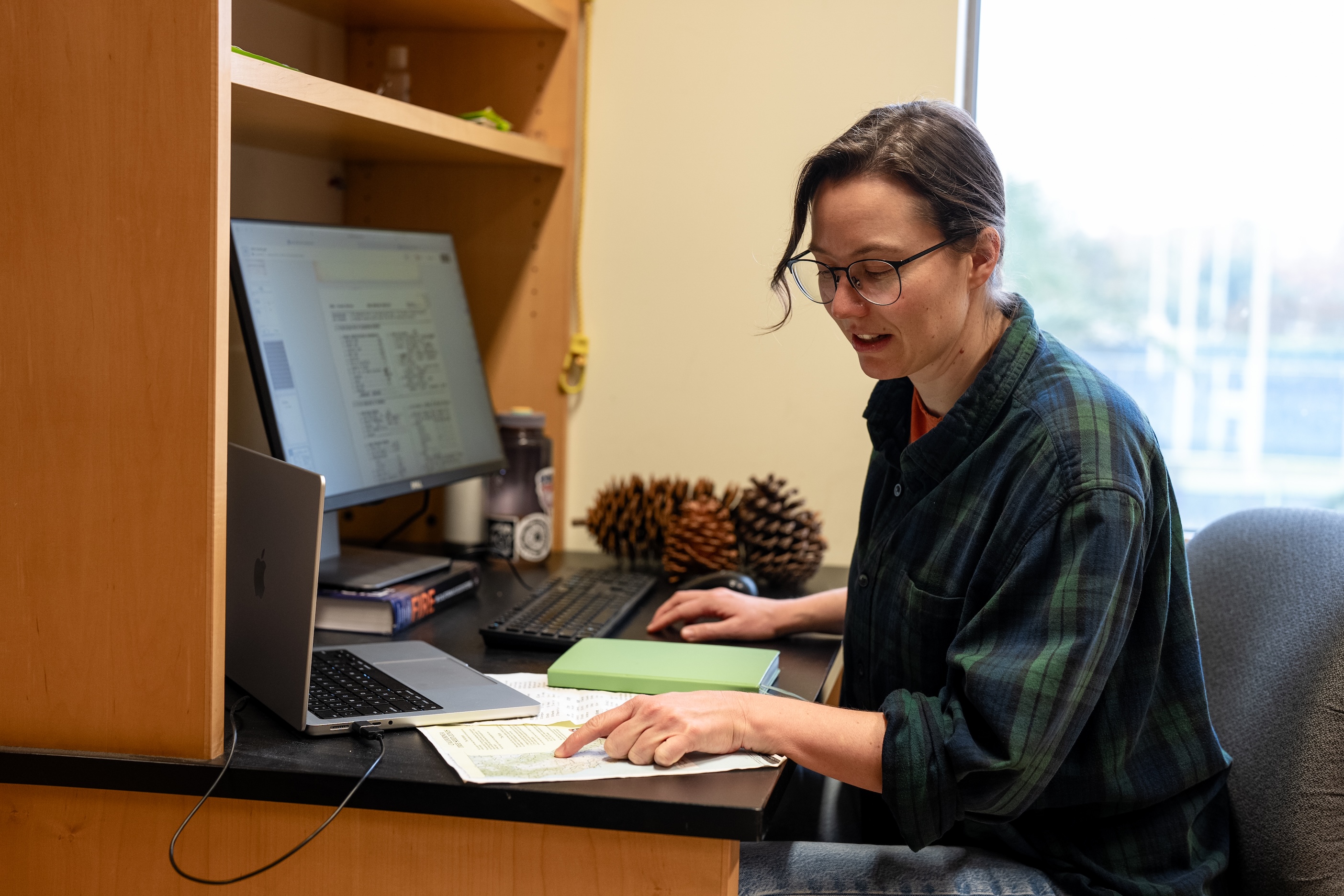
“Nina’s project is a perfect example of the kind of work we aim to do at UC Davis, applying ecological research and analysis to solve an urgent challenge facing the state,” said Professor Andrew Latimer in the Department of Plant Sciences and Venuti’s advisor.
The work involved a deep dive into six decades of handwritten collection records from the U.S. Forest Service and the California Department of Forestry and Fire Protection, or CAL FIRE, and was funded by a CAL FIRE Forest Health Research Program grant.
“Our goal is to have enough seed in the bank so that if a catastrophic megafire happens, we are at least in a position where we can reforest part of it,” said Marisol Villarreal, the assistant seed bank manager at the CAL FIRE L.A. Moran Reforestation Center in Davis. “The seed banking effort is trying to plan for if it is needed later. It’s like the insurance.”
Decades of seed collecting
CAL FIRE began collecting, removing seed from cones and banking those seed in the 1960s and holds inventory from every decade. Of the roughly 45,000 pounds of seeds, 20,000 pounds are available for public use. The agency maintains a database of seed bank needs of 15 conifer species – such as Douglas fir, ponderosa pine and incense cedar – and organized by seed zone and elevation. The current total estimated public need is nearly 56,000 pounds.
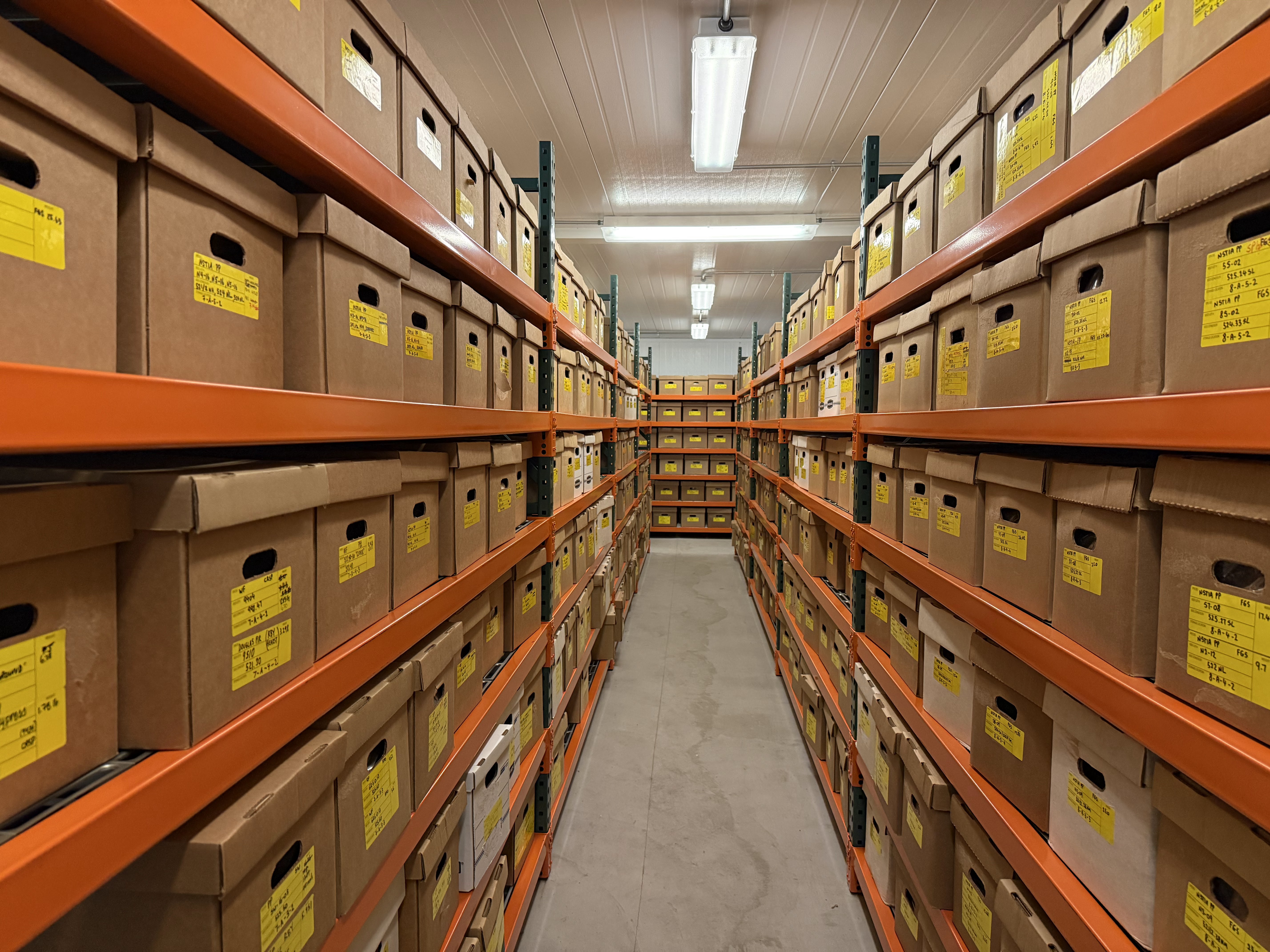
“It’s a multiple decade’s effort, which is why Nina’s research might be interesting because, as it is right now, it’s kind of a scramble,” Villarreal said. “If we have a better idea of what makes different species produce cone, maybe we can refine our targeting efforts instead of scrambling to visit every single landowner who has allowed us on their land.”
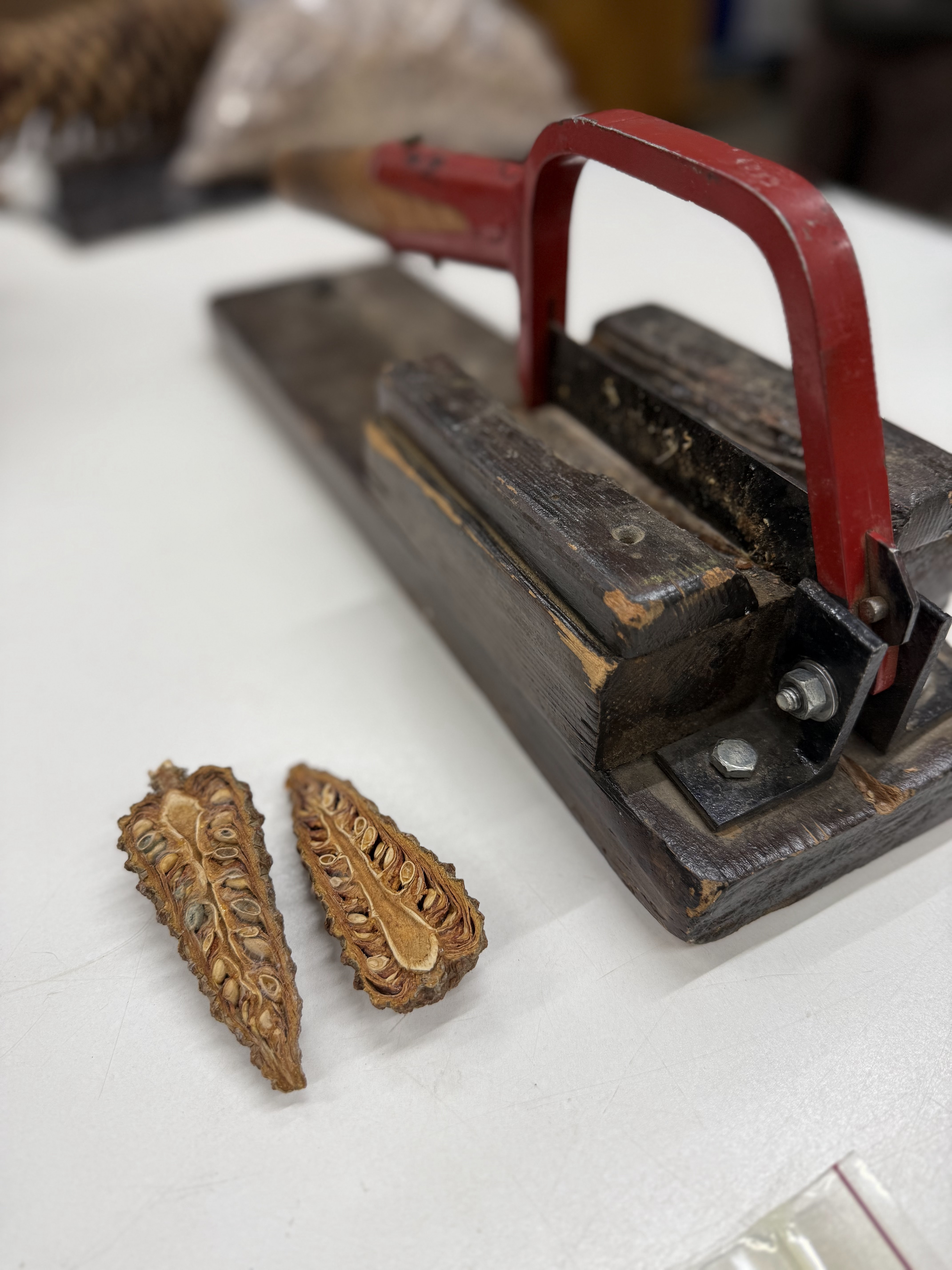
Finding cones is not easy. Each May, CAL FIRE works to identify landowners who will grant access for collecting. If approved, site visits happen in June and July to scout out stands that may be producing. Some sites require multiple visits. Then there is the matter of mobilizing tree climbers and others to remote locations to collect cones.
“It’s all this time-sensitive work that has to happen with whoever is available who is trained,” Villarreal said.
Cone camp and other efforts
Enter the California Reforestation Pipeline Partnership, a collaboration between CAL FIRE, U.S. Forest Service’s Pacific Southwest regional office and American Forests, a national nonprofit.
The partnership formed in 2022 and brings together public agencies, academics, tribal entitles, land managers and nongovernmental organizations focused on getting trees in the ground after high severity wildfires, said Shelley Villalobos of American Forests and the partnership’s senior manager.
“The very first thing people said was, ‘We don’t even know where the seed is being produced in any given year’,” she said. “It’s like this dance with the trees.”
The Reforestation Pipeline Partnership started a cone camp that has trained 400 people in the past three years. It also created a mobile app for people to report cone sightings, receiving 1,800 reports last year and 3,500 this year.
“There are years when there’s just not much to be found,” Villalobos said. “I think the efficiency that could be gained from Nina’s research would be welcome for these busy forest land managers. It would help the few arborist and climber services companies be able to know when to have their people ready.”
A blend of ecology and programming
Venuti focused on tree reproduction and how fires affected cone production early on in graduate school. She spent dizzying days counting cones in tree canopies and anecdotally saw that ripening was happening earlier than what old Forest Service publications recorded.
“This seemed like a knowledge gap that we could potentially help fill, given our own experiences and skillsets,” Venuti said.
So, the ecologist ramped up her coding skills in R, a programming language that allows for data analysis and predictive modeling. She and her research team created a digital library by scanning and interpreting thousands of paper records, which had details such as tree species, location and collection volume.
“It’s kind of an archival ecology project,” Venuti said. “It’s data collection in a really different way. It’s not field based in the way that most of my work has been.”
Those data points can be used to predict and characterize peak ripeness timing. In December, Venuti presented early results at the Association for Fire Ecology conference, showing that warm spring temperatures are strongly associated with earlier ripening. She and her team will continue their modeling efforts, testing what parameters, such as temperature, precipitation and elevation, help generate the most reliable predictions of cone ripeness windows.
Eventually, the team aims for the predictive tools to be publicly accessible so that people can run models each year based on historical data and variables that are critical for predicting ripeness timing.
“Our long-term goal is to make this a living database and to work with the community to update it annually with new collection records, so that we can continue to learn and make better forecasts,” Venuti said. “All of this is done with the hope of supporting the folks on the ground, doing the work to reforest after fire.”
This article was originally published by the UC Davis College of Agricultural and Environmental Sciences.
Media Resources
- Nina Venuti, Department of Plant Sciences, nevenuti@ucdavis.edu
- Andrew Latimer, Department of Plant Sciences, amlatimer@ucdavis.edu
- Emily C. Dooley, College of Agricultural and Environmental Sciences, ecdooley@ucdavis.edu
- Kat Kerlin, UC Davis News and Media Relations, 530-750-9195, kekerlin@ucdavis.edu