

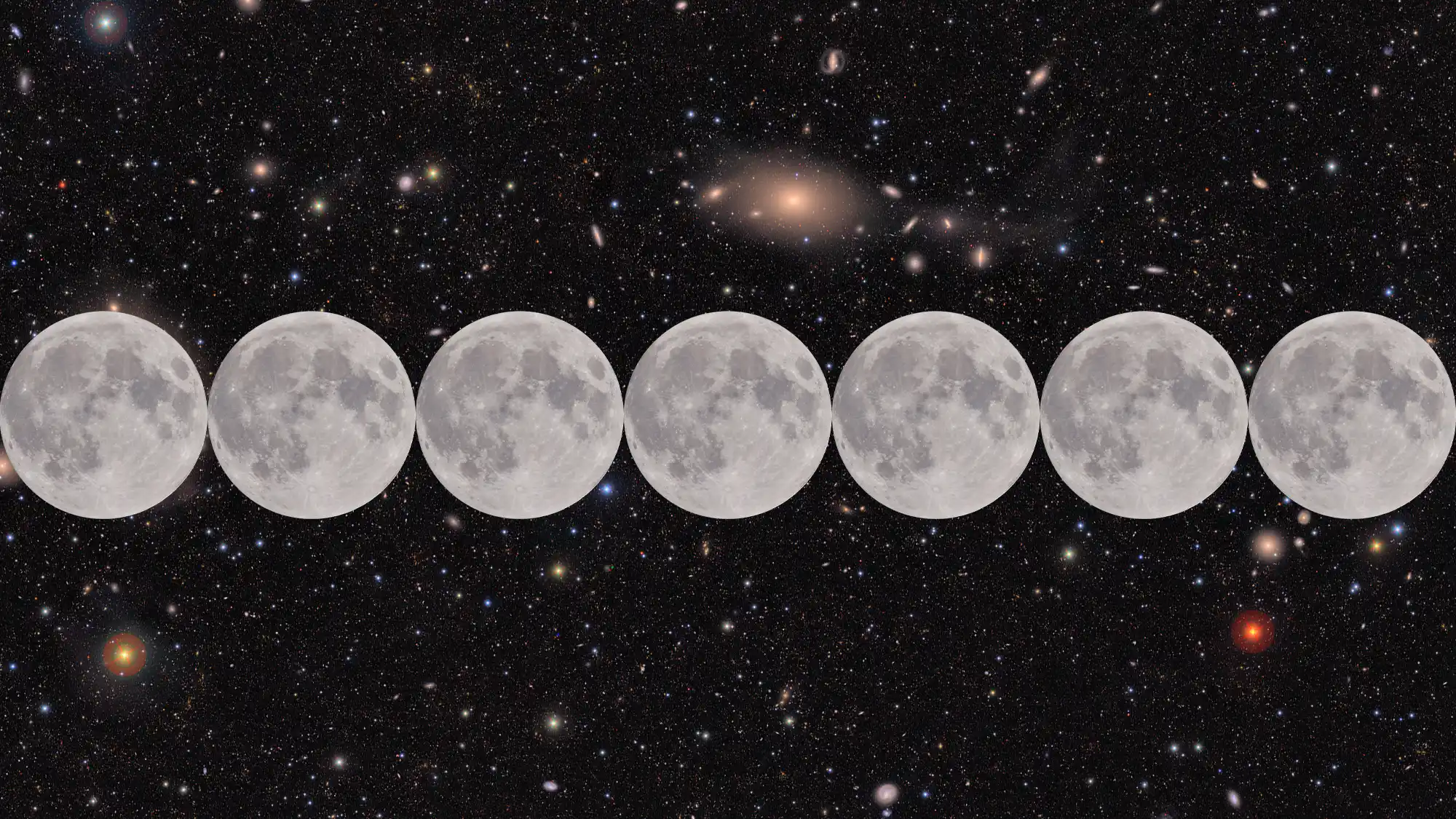
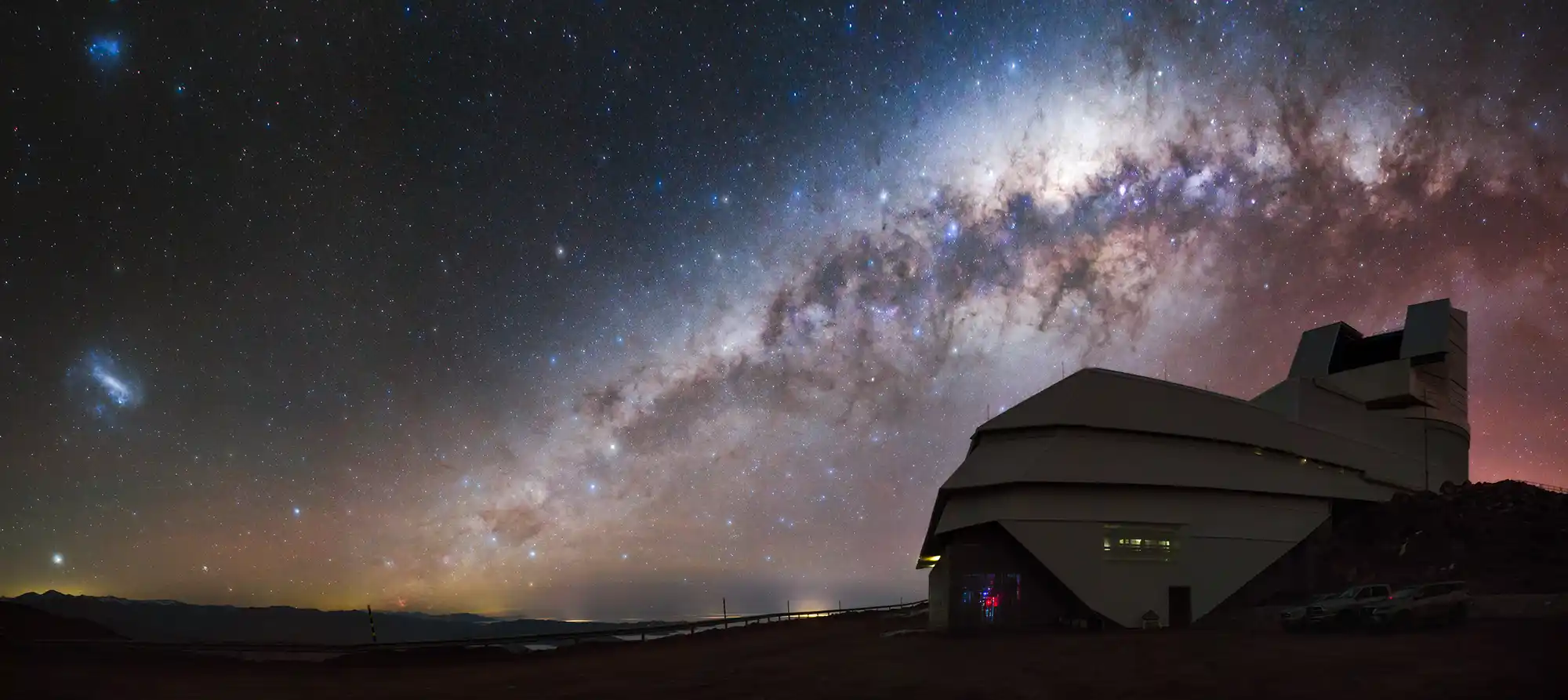
This summer, the Vera C. Rubin Observatory launched its 10-year astronomical survey to create the most comprehensive, cinematic record of the universe. Equipped with the largest digital camera ever built, this observatory, located in northern Chile, can capture in a single image an area 45 times the size of the moon. By tracking the night sky over 10 years, researchers hope to map the solar system and Milky Way galaxy in unprecedented detail, learn more about the nature of dark matter and dark energy, and advance science in ways we can’t even predict.
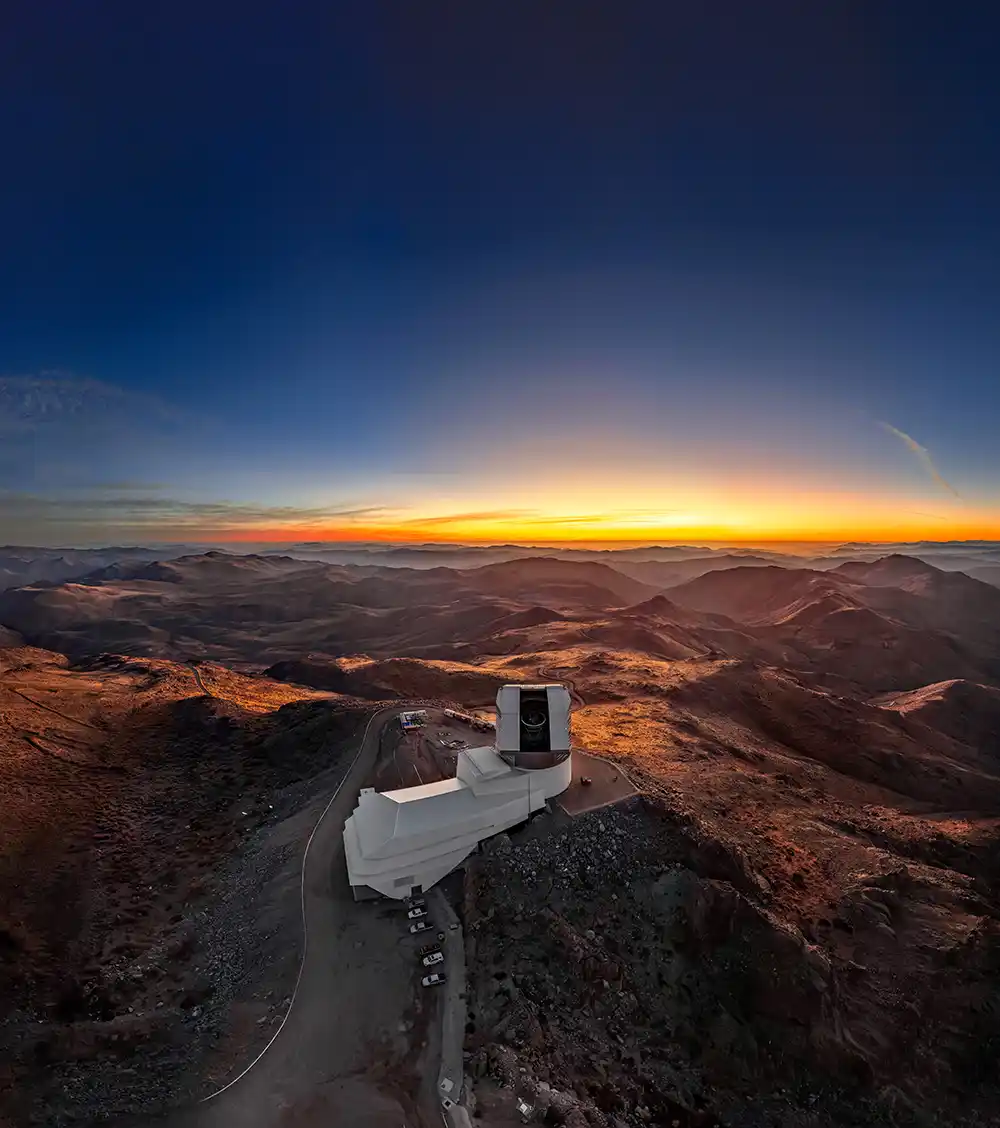
While thousands of people played a part in making the Rubin Observatory a reality, Tony Tyson, a distinguished research professor in the Department of Physics and Astronomy at the College of Letters and Science at UC Davis, played a formative role, acting initially as the facility’s founding director and now its chief scientist.
Over three decades, Tyson developed the observational techniques and technologies underlying the facility’s telescope and its camera, wrote proposal after proposal arguing for its scientific importance, and networked to secure critical funding for its construction, and much more.
With decades of work finally coming to fruition, Tyson is in the spotlight. Last year, he was listed by Nature as one of 10 people who shaped science in 2025. More recently, TIME named him to the 2026 TIME100, the publication’s annual list of the 100 most influential people in the world.
We sat down with Tyson to discuss this recent recognition, his background and the technology behind the Rubin Observatory’s revolutionary camera.
How did you find out that you were included in the TIME100 list?
They got hold of me and they said privately, “Don’t tell anybody, but you are probably going to be selected.” Two weeks later I got an invitation to go to a gala event in New York City. I was supposed to wear a tux. That is not my style, but I didn’t have to look very far to find an excuse not to go because I’m working on a book and my editor and I had made an appointment to get together in Philadelphia at the same time, so I flew to Philly instead of New York and we made a lot of progress on editing.
How did you become passionate about searching for faint signals in the cosmos?
I was a very sick little kid. Back in the 1940s, they didn’t have the right kind of drugs for heart problems, which I still have today, and so they put me in a steam tent. It was very strange because I had a fever as a result of this, but the idea was to sweat it out.
For some reason, I was intrigued by radio, and so my dad got me a used shortwave radio, plugged it in, and threw a little wire and antennae out the window. I had headphones, and I was able to tune the radio to these very, very faint signals. I was intrigued by hearing very distant stations in the noise. I was hearing dots and dashes too, so I decided to learn Morse code on my own. When I got better, I was able to apply to the Federal Communications Commission for a ham license, an amateur radio license.
That got me completely hooked on the whole notion of extracting very faint signals out of the noise.
You joined the UC Davis faculty in 2004, but before that you were an employee at Bell Labs. What were you doing there?
I was very lucky to have been selected to be among about 200 people out of the 300,000 employees of AT&T and 10,000 employees of Bell Labs who could do whatever we wanted. They hired me and said, “Forget what you were thinking about doing when you were hired. We want you to do something totally new outside of your scientific comfort zone. Take a big risk and come back in a few years and tell us a great story.”
So I took them up on that, and I did some crazy experiments. One of the things that I eventually did was apply charge-coupled devices, or CCDs, to astronomy. [Editor’s note: CCDs are a chip-based technology used to convert photons into high-quality images.]
One of the things that intrigued me was the notion of the dark universe. Dark matter was already a thing back then, and it was a big question mark. I invented a technique called weak gravitational lensing. When there’s a giant overdensity of dark matter in the foreground and very distant galaxies behind them, the galaxies, as Einstein taught us, are moved to a new apparent place in the sky. You see them at a place where they’re not and that gravitational lensing effect causes them to be distorted in a very telltale way. The technique used those telltale distortions to reconstruct an image of the dark matter in the foreground.
How did CCDs come into the picture?
At Bell Labs, I was right down the hall from George Smith, who was the inventor of the CCD, and he knew about my interest in astronomy. He came into my office and said, “You know, in view of your interest in astronomy, you might want to take a look at this little thing.” And he showed me this tiny chip about 3 by 4 millimeters in size. I said, “George, that’s really nice, but let me show you something.” And I brought out these big photographic plates.
But I had a little lab at home, where I tested the CCDs, and it looked like they were going to be exceedingly sensitive compared to the photographic plates, maybe 30 times as sensitive.
There’s a long history after that.
A long history that eventually led to the creation of the Vera C. Rubin Observatory. How did that idea materialize?
Before the Rubin Observatory, we had a camera installed on the Victor M. Blanco Telescope in Chile. The Big Throughput Camera was one of two instruments, the other being the Hubble Space Telescope, that was used in the discovery of dark energy, which remains one of the research focuses of the LSST camera.
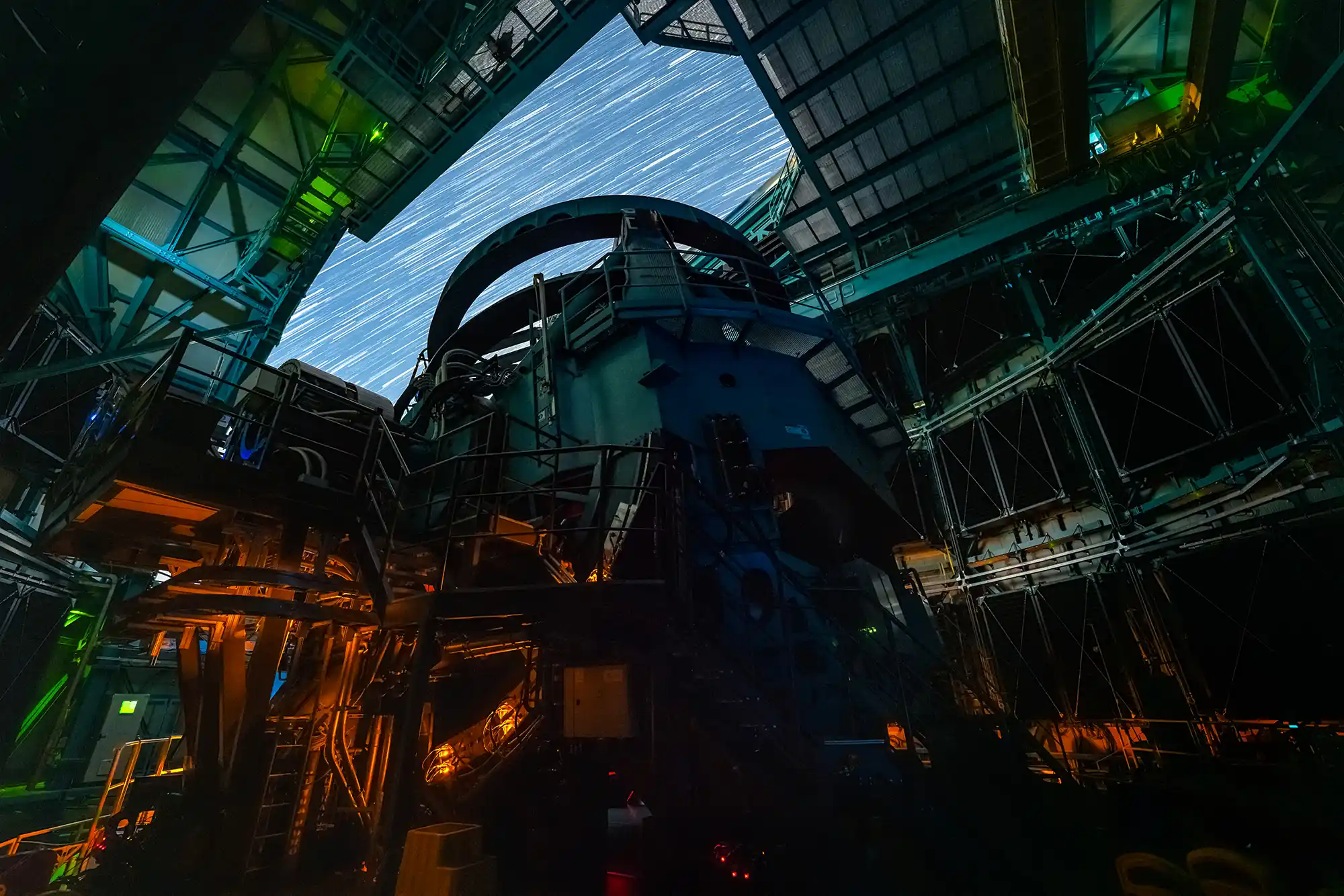
One night in 1996 around 3 a.m., we were in the control room and this telescope, even though it had been recently built, was pretty old-fashioned in terms of its design. It was actually held together with rivets, it had a main mirror, and then way up at the top it had a place with a lens where you could put a camera.
There were several of us in the control room, and I said, “We can do better than this. We can imagine building a much better, bigger telescope to catch more light. If it catches more light, that means we could take shorter exposures. The camera has to have a wide field of view. Therefore, it has to have a lot of these CCDs.”
That was the origin of this whole idea that is now the Rubin Observatory LSST camera, which has 189 CCDs and a huge field of view, about 10 square degrees. It took us a while to develop all the techniques and popularize the idea with federal agencies.
You’re currently chief scientist of the Rubin Observatory. What does that role entail?
It entails trying to get my mind around what is going to stop us from getting really good images on a routine basis. There are a lot of things that can stop us from doing that, from the weather to the telescope not moving fast enough to the mirror misbehaving because of temperature gradients to satellites. We want really good images; we want stars to be point-like, and we want the galaxies that we’re going to be measuring cosmic shear from to not be distorted by something else, either in the camera or in the system. So I worry about all aspects of the system and as a result, we’re still using the lab facility here at UC Davis.
How does your lab at UC Davis inform the Rubin Observatory?
We had to build unique kinds of CCDs for this particular project. It’s not your ordinary large CCD that you can buy off the shelf. They had to have wavelength coverage all the way from the near ultraviolet to the near infrared, all the way from 300 nanometers up to beyond a micron wavelength. They had to be large, but they also had to be split up into multiple sub-CCDs because we were going to have 189 of them in the focal plane, and that whole focal plane had to be read out in only two seconds.
When you try to do all this, you get into some trouble. There are systematic errors that occur, so I knew I needed to build a facility that imitated the beam of the telescope. Our facility at UC Davis allows us to use a photomask with galaxies and stars on it and reimage it on to a CCD, so that we can imitate the Legacy Survey of Space and Time observing that we are going to do, to figure out systematic errors.
The Rubin Observatory just launched the “Legacy Survey of Space and Time.” What is the goal of this 10-year endeavor?
In a sense, the survey is trying to do something that no one’s ever attempted before, mainly to make a digital color motion picture of the universe. To do that, you want to move around the sky relatively rapidly while taking a whole lot of short exposures, and you want to issue an alert for anything that you find that’s interesting or unusual within two minutes of closing the shutter.
The alerts go out to the world, but there are going to be so many of them, about 8 million every night, that nobody in their right mind is going to subscribe to that data hose. So, we’ve come up with a project with a bunch of data brokers that receive this data, and each broker specializes in one particular science application. Anyone in the science community can apply to this output from the data brokers, which is basically a list catalogued by scientific interest.
But the ultimate customer for all of this is the next generation of young, curious minds. We want to make it as easy as possible for them to handle and interpret all of this data.