

The Resnick Center for Agricultural Innovation opened its doors on May 19, with a ribbon-cutting ceremony that drew students, faculty, donors and industry partners. The 34,000-square-foot building furthers the campus’ long-celebrated agricultural excellence, and features curved glass etched white with tree-like patterns.
Seamlessly connected at irregular angles, the building is LEED-certified and all-electric, supported by solar power. The center is located near the current Plant Sciences Building off Hutchinson Drive.
The new facility is thanks to a $50 million gift from Lynda and Stewart Resnick, through their foundation, which included $40 million for the facility and $10 million to establish the Resnick Agricultural Innovation Research Fund. This gift will support agricultural innovation at UC Davis, creating a new hub where students, researchers and industry partners are advancing the future of food and agriculture.

High-tech labs
The center’s labs are equipped with robotics, sensors, data science platforms and artificial intelligence tools. Labs are focused on challenges in four primary areas: maximizing sustainability (finding new ways to use agricultural byproduct, waste, and other bioresources), developing next generation technologies (devising tools that guide precision in water managements, data gathering, robotics and more), increasing crop resilience, and preparing tomorrow’s leaders in sustainable agriculture.

Extraction food grade lab
The extraction food grade lab is designed with the idea that existing agricultural byproduct such as shells and hulls separated from the nuts we eat, can not only be removed from existing waste streams, but potentially find new life in producing other products. This space houses up to seven process skids used to extract food products from agricultural byproducts using green technology such as supercritical carbon and ultrasound processes.
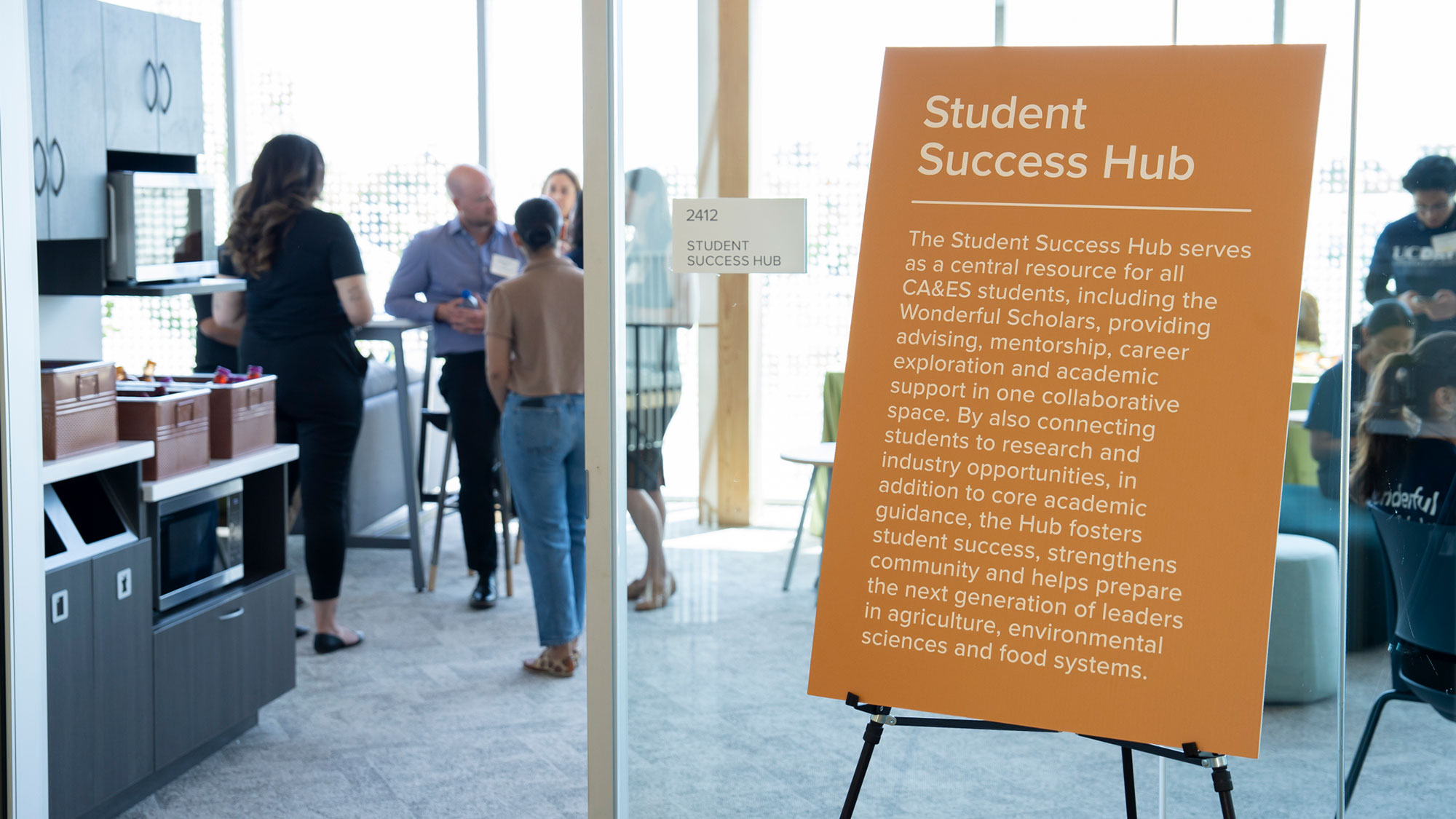
Student Success Hub
The Student Success Hub will offer mentorship, career coaching and academic advising to all College of Agricultural and Environmental Sciences students and provide a home base for students in the Wonderful Scholars Program, a scholarship program established by the Resnicks to support students from the Central Valley.
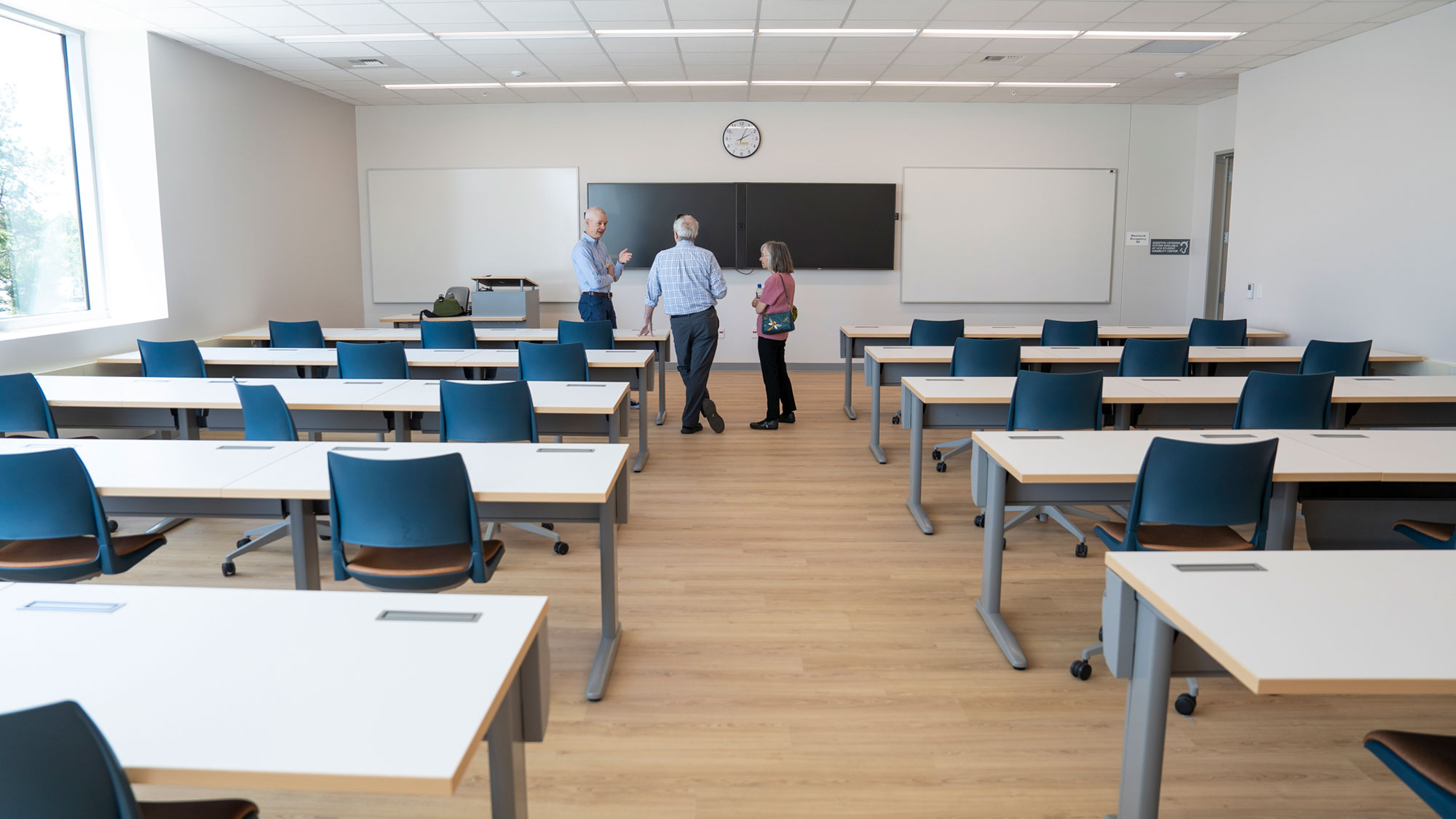
Flexible classroom design
The center features flexible classrooms designed specifically for agricultural, environmental and sustainability focused research, incorporating sensor/robotics development, and food by-product research.
Robotics and Sensor Testing Lab
This space is designed for larger scale testing of sensors, automated and robotic systems within a controlled environment and can accommodate up to six potted trees with pot dimensions of up to at least 72 inches.
It has a roll-up door so that prototypes can be wheeled out into the orchards or eventually over to the neighboring Student Farm.