

Some think of UC Davis and UC Davis Health in Sacramento as separate entities that are divided by the Yolo Causeway. The truth is, our collaboration isn’t bound by geography, especially when it comes to health.
Together, our campuses join forces to conduct research that leads to medical breakthroughs that benefit not just Davis residents but everyone. Through our medical training programs and dissemination of research, we further spread new knowledge, innovations and best practices to the wider health care workforce.
After all, we cannot work in silos when seeking solutions for great challenges, particularly when addressing human health. UC Davis is especially primed for collaboration as the most comprehensive campus in the University of California system, one that includes a world-class medical center.
This allows UC Davis to be on the cutting edge of research for Alzheimer’s Disease, which afflicts more than 7 million Americans and is the seventh leading cause of death in the country. We have researchers in computer and electrical engineering working closely with the UC Davis Alzheimer's Disease Research Center in Sacramento to make breakthroughs.
Our cross-disciplinary research led to the development of a brain-computer interface that enabled a person with ALS to speak again. Developed by a team that included neurosurgeons, neuroscientists and engineers, the technology has the potential to give people with paralysis greater autonomy.
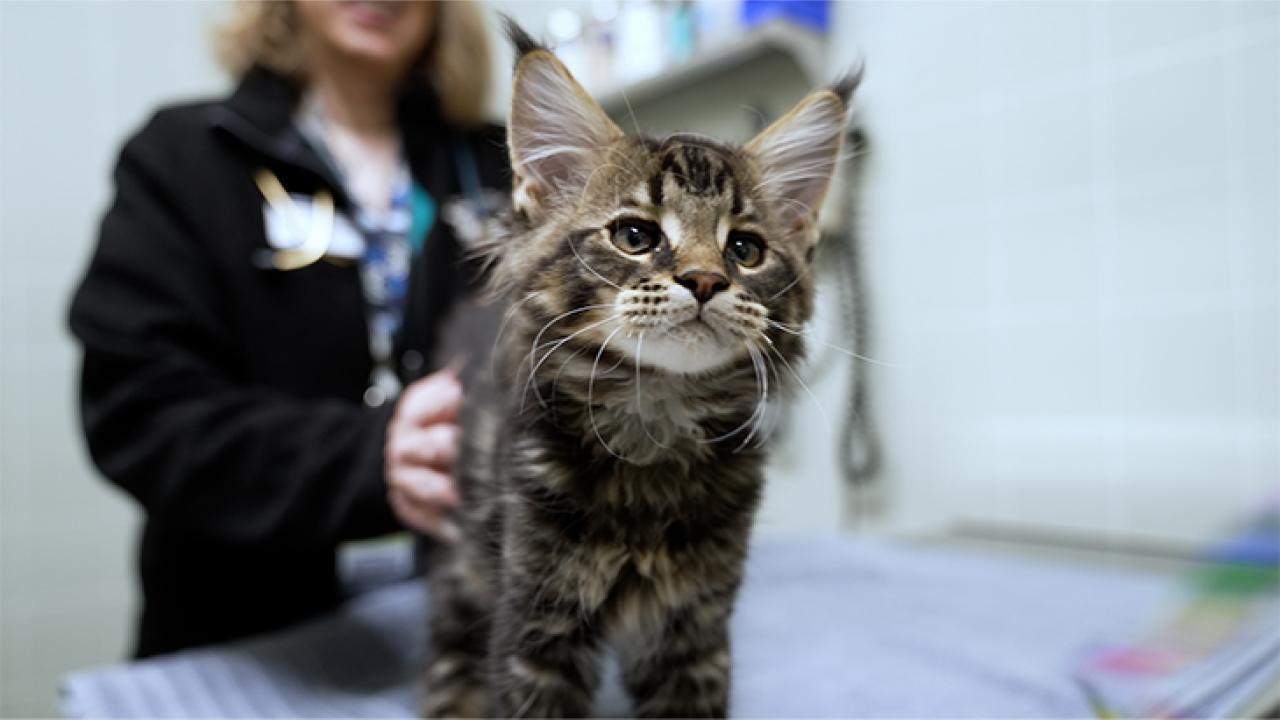
This work even transcends species. Neurologists from UC Davis Children’s Hospital and the UC Davis Weill School of Veterinary Medicine recently performed a groundbreaking brain surgery on a kitten that also showed promise for saving human lives. Together, they are learning how their surgical technique can be adapted to heal human babies afflicted with hydrocephalus, a dangerous buildup of fluid in the brain.
This cross-campus collaboration extends to protecting public health in our region, which was especially crucial during the COVID-19 pandemic. Researchers from the College of Engineering worked closely with the School of Medicine to develop technological innovations for ventilator production and 3D-printed test swabs. Today, our UC Davis experts are now using AI to help spot future disease outbreaks before they become global pandemics.
We’re also preparing the next generation of health care professionals to serve our region and the entire state. Tribal Health PRIME trains students to practice medicine in rural and tribal communities, including those in Grass Valley, Truckee and Modesto. TEACH-MS at our School of Medicine focuses on students who aim to practice in urban and historically underserved communities.
Recent news has me even more optimistic about UC Davis’ cross-campus research. Our leadership in comparative and veterinary medicine is now turbocharged by a $120 million gift from Joan and Sanford I. Weill. It strengthens our One Health approach, advancing translational research on diseases such as cancer, neurological disorders and cardiovascular conditions that affect both animals and humans.
This holistic focus recognizes the complex connections among humans, domestic animals and wildlife, opening the door to new treatments and breakthroughs.
We have new leadership at UC Davis Health to guide us into an even brighter future. Last month, we welcomed Mark Rosenblatt as vice chancellor of Human Health Services. His leadership is focused on integrating research, education and clinical operations to redefine what academic health systems can achieve.
These examples demonstrate how UC Davis’ campuses thrive when they work together for the greater good. To support the health of our communities now and in the future, these collaborations must continue even as federal funding cuts continue to threaten research and programs.
We’ve seen firsthand at UC Davis how federal research funding cuts can stunt our ability to innovate and collaborate. Such was the case last year with the closure of our Feed the Future Innovation Labs. These labs partnered with the U.S. Agency for International Development, or USAID, on the frontlines of promoting global food security and inclusive agricultural growth.
Your support for our research and collaboration at UC Davis is essential. Our From Labs to Lives campaign illustrates how our federal research funding is a critical investment in public health, building resilient communities and strengthening the economy. I encourage you to share it with your networks and spread awareness about the importance of our collaborative research for Davis, the region and beyond.
No matter which side of the causeway we work or call home, we are one UC Davis. And, we’re stronger when we work together, all while speaking up for federally funded research that helps us harness our collective powers.
Chancellor Gary S. May’s monthly column is published in The Davis Enterprise and Dateline UC Davis.