

To the UC Davis community:
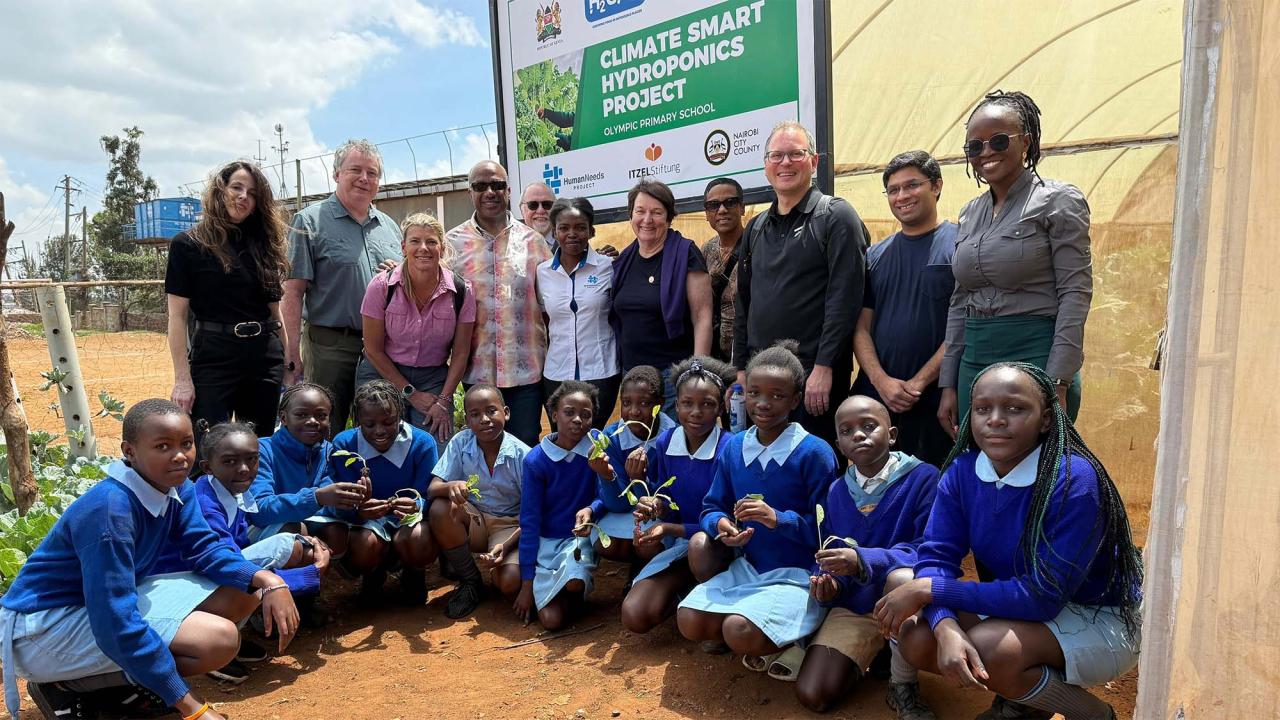
During the holiday season, one thing I’m especially grateful for is the way UC Davis transforms research into service around the world. I experienced this firsthand last month while leading a university delegation in Kenya, where I saw how our partnerships turn global challenges into opportunities for shared progress. We met with government officials, higher education leaders, community organizations and innovators to explore how we could strengthen our partnerships to address the challenges we face as a global community.
After all, issues like managing the effects of climate change, preventing future pandemics and feeding a growing planet are not constrained by national borders. Local problems like virus outbreaks and food shortages can quickly escalate into global threats that can impact every community, every neighborhood and every family.
Here at UC Davis, research is not just an abstract pursuit. It is at the heart of our mission. Whether that work happens in Kenya, Patagonia or right here at home, our scholars and students turn knowledge into action, benefiting people and the communities where they live.
Building hope and opportunity
One of the most powerful moments of our Kenya trip was our visit to the Women’s Economic Empowerment Program, or WEEP. Staff and students from our Betty Irene Moore School of Nursing support the program, which assists single mothers and widows, most of whom are living with HIV. Their inspiring work is a model for how local leadership and academic collaboration can create lasting, positive change. I’ll never forget the experience of helping distribute food at the program and hearing personal stories from the people receiving assistance.
Across the world, our students and researchers are not just developing new technologies and ideas, but ensuring they are for the good of others. They are also engaging with local societies to see how we can make our communities more equitable and healthier.
For example, UC Davis researchers found that policies in India aimed at overcoming caste inequality reduced infant mortality and increased vaccination rates among mothers. Their study could shed light on ways to improve the lives of marginalized groups worldwide.
Protecting health and agriculture
UC Davis faculty and students are collaborating with international partners from the most remote corners of Earth to our densest population centers.
In a sparsely inhabited section of southern Patagonia, Marcela Uhart from our School of Veterinary Medicine is studying avian flu in elephant seals. Her research explores the impact on seal populations and the potential threat to human health, which is especially important given that a pandemic of H5N1 bird flu could be worse than COVID-19.
In South Asia and sub-Saharan Africa, including Bangladesh, Ethiopia and Nepal, UC Davis’ Resilience+ Innovation Facility transforms agricultural practices among small-scale farmers. The extreme weather in these regions makes this mission challenging. But our researchers remain diligent as they design and deploy novel financial tools that leverage satellite-based technology to detect climate shocks. In the end, they help farmers sustain their livelihoods and ensure their families’ food security.
Enabling partnerships and serving communities
Collaboration is at the heart of our commitment to extend our research across the world.
The UC Davis chapter of Engineers Without Borders provides our students with hands-on experience while serving communities. In 2023, our students traveled to Bolivia, where they helped repair household latrines as part of an ongoing project. This work is vital to protect the health of communities that lack access to modern sanitation.
Our ability to engage across the globe is aided by our Seed Grants for International Activities, which support faculty across campus taking on innovative projects. Among many other endeavors, one such grant has empowered Jiayi Young, chair of the Department of Design, to work with partners across Europe and Taiwan to study the impacts of AI on society. Their research uncovers how social media and AI shape our political and social landscapes.
A growing population also needs solutions for sustainable and equitable transportation. The UC Davis Institute of Transportation Studies is a world leader in this area through a network of international centers. For example, the Global South Center for Clean Transportation supports zero-emission mobility and clean-energy transitions across South Asia, Africa, Latin America and other emerging regions, addressing the challenge of balancing the need for increased transportation infrastructure with environmental protection.
UC Davis also enjoys a longstanding partnership with the University of Sydney in Australia. In 2021, our institutions entered into an agreement focused on research collaborations and shared funding in veterinary medicine, agriculture and engineering, among other fields.
One of our most important collaborations centers on mitigating the threat from wildfires. UC Davis and the University of Sydney participated in workshops on multispecies justice and cultural fire practices for managing agricultural landscapes. The delegation from UC Davis included Professor Beth Rose Middleton Manning and Assistant Researcher Nina Fontana from our Department of Native American Studies. Indigenous peoples from both California and Australia also met to learn from one another and share strategies in caring for the land using fire and other techniques.
These examples are just a small fraction of UC Davis’ global engagement. They demonstrate how our research mission directly improves lives, strengthens communities and addresses pressing global challenges, reaffirming our commitment to making a meaningful difference worldwide.
Farewell to 2025
The impact of this work, at home and abroad, demands that we continue to stand up for the federal research funding that makes much of it possible. I encourage you to explore our From Labs to Lives website, which showcases the human impact of our UC Davis research and helps us find solutions to critical issues here and around the world.
As we reach the end of 2025, LeShelle and I wish a happy holiday season to our UC Davis community. Our campus is an innovative ecosystem where incredible ideas are planted and harvested for the global good. We are grateful that you’re part of our Aggie family and look forward to all we’ll accomplish in 2026.
I also send best wishes to our students during finals week. For those staying on campus, I hope you enjoy a well-deserved break and stay connected with your community.
Let’s continue working together to make our world a better place.
Sincerely,
Gary S. May
Chancellor